



Find the Right Shield for Your Daytona Helmet
Select your helmet model, compare shield types, understand VLT categories, and match the correct anti-fog lens before ordering.
1 Shield Compatibility Selector +
Select your Daytona helmet model below. This guide will show the proprietary shield family, matching anti-fog lens, and the correct shopping link.
Click to select model
Select a helmet model to view the correct shield.
Select a helmet model to view the matching lens.
Daytona shields and anti-fog lenses are model-specific.
2 Shield Colors +
Daytona offers a full catalog of shield colors and finishes across the lineup. Color availability varies by helmet model, meaning some models offer a wider range of colors than others.
Clear
Best for maximum visibility, low-light riding, and nighttime use.
Smoke
Fixed daytime tint for glare reduction and a darker look.
Blue
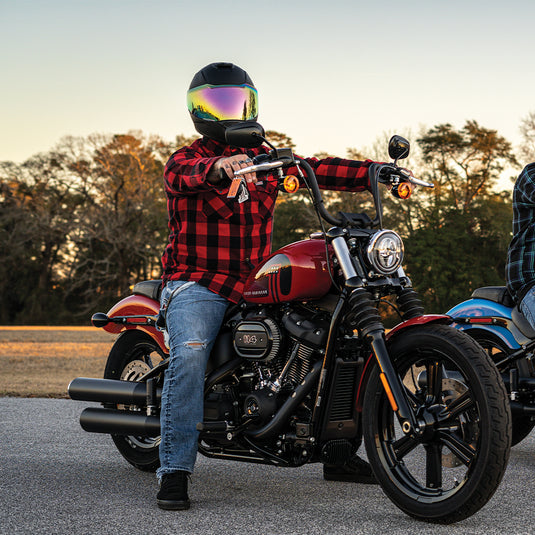
Reflective color finish with a bold performance look.
Gold
Bright mirror-style finish for a premium high-contrast appearance.
Green
Color mirror style with a vivid green reflective finish.
Purple
Color mirror style with a custom purple reflective appearance.
Red
Aggressive red mirror-style finish for a custom look.
Pink
Bright custom color finish with a bold pink appearance.
Rainbow
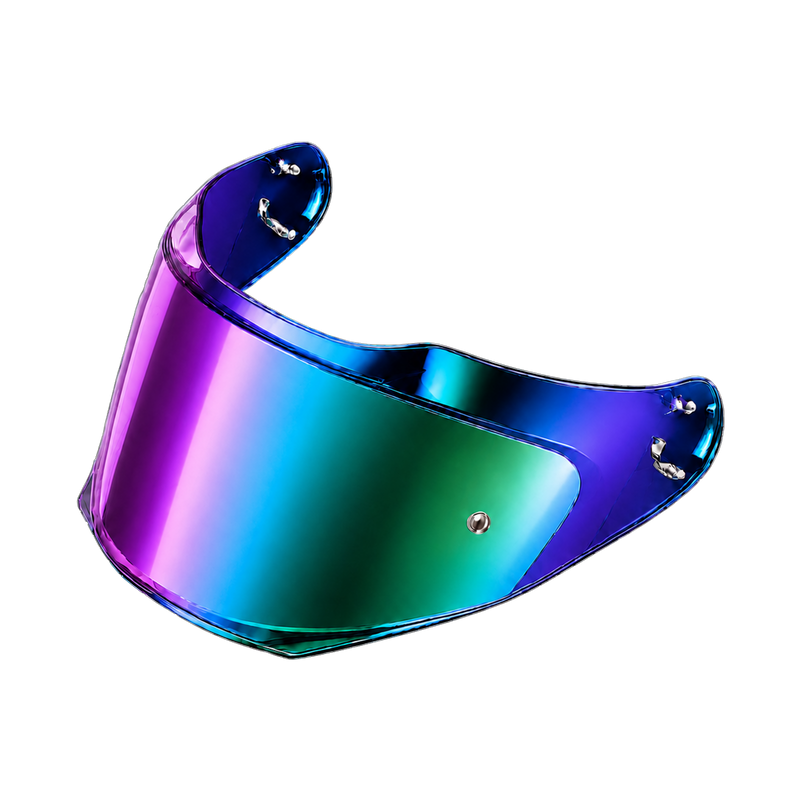
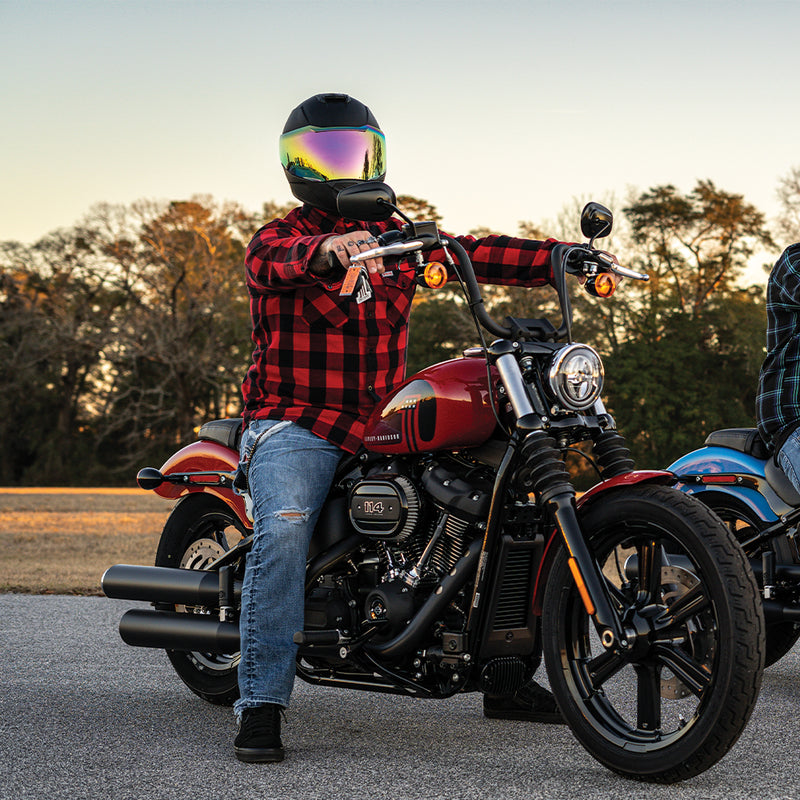
Multi-color reflective finish with the loudest visual effect.
Mirror
Silver mirror-style finish for bright daytime riding and style.
Photochromic Smoke
UV-reactive smoke tint that changes based on sunlight exposure.
Photochromic Gold
UV-reactive shield with a gold color finish when activated.
Photochromic Red
UV-reactive shield with a red color finish when activated.
Photochromic Blue
UV-reactive shield with a blue color finish when activated.
Photochromic Green
UV-reactive shield with a green color finish when activated.
Photochromic Purple
UV-reactive shield with a purple color finish when activated.
Photochromic Pink
UV-reactive shield with a pink color finish when activated.
3 Photochromic vs. Non-Photochromic +
Photochromic Shields
Photochromic shields use light-reactive technology that changes tint based on UV exposure. In stronger sunlight, the shield darkens. In lower UV conditions, it returns clearer.
- Best for riders who ride through changing daylight conditions.
- Helps reduce daytime glare without manually swapping shields.
- May react differently behind windshields, indoors, inside vehicles, or in low-UV conditions.
- Transition performance can naturally change over time with UV exposure, heat cycles, use, cleaning, and age.
Non-Photochromic Shields
Non-photochromic shields have a fixed tint or finish. They do not automatically change based on sunlight or UV exposure.
- Best for riders who want a consistent shield color.
- Clear is best for maximum visibility and low-light riding.
- Smoke and mirror options are best for daytime glare reduction.
- Colored mirror options are primarily style-forward with daytime glare reduction benefits.
4 VLT Scale & Shield Tint Guide +
VLT stands for Visible Light Transmission. A higher VLT percentage means more visible light passes through the shield. A lower VLT percentage means the shield is darker and reduces more glare. Shield color, coating, UV exposure, and lighting conditions can affect how a shield appears during use.
S0
Clear / Photochromic at Night
Best for nighttime, low-light, overcast conditions, and maximum visibility.
S1
Photochromic at Low-to-Medium UV
Light tint range as photochromic shields begin reacting to UV exposure.
S2
Smoke / Photochromic at Medium-to-High UV
Medium tint range for daytime riding and moderate glare reduction.
S3
Green / Purple / Blue / Red / Pink / Rainbow
Dark tint range for bright daytime riding, color-mirror styling, and stronger glare reduction.
S4
Mirror / Gold / Very Dark Mirror Finishes
Very dark tint range for bright conditions. Not recommended for nighttime or low-light riding.
| VLT Category | VLT Percentage | Daytona Shield Guide | Best Use |
|---|---|---|---|
| S0 | 80%–100% | Clear shields / photochromic shields at night or in clear state | Nighttime, low-light, overcast conditions, and maximum visibility. |
| S1 | 43%–80% | Photochromic shields in low-to-medium UV conditions | Changing light conditions where the shield is beginning to tint. |
| S2 | 18%–43% | Smoke shields / photochromic shields in medium-to-high UV | Daytime riding and moderate glare reduction. |
| S3 | 8%–18% | Green, purple, blue, red, pink, rainbow, and darker color-mirror finishes | Bright daytime riding, stronger glare reduction, and custom styling. |
| S4 | 3%–8% | Mirror, gold, and very dark mirror-style finishes | Very bright daytime conditions only. |
5 Shield + Anti-Fog Lens Matchup +
Each anti-fog lens must be matched to the correct shield family. Use the helmet model, shield family, and SKU together before ordering.
| Helmet Model | Shield Family | Matching Anti-Fog Lens / SKU | Compatibility Wording |
|---|---|---|---|
| C6 / C6 PRO | C6 Outer Shield | OptiVision 200 Lens — O-200-C6 | C6 shields & Anti-fog lenses are proprietary with C6 helmet models only. |
| Viper | Viper Outer Shield | OptiVision 200 Lens — O-200-V | Viper shields & Anti-fog lenses are proprietary with Viper helmet models only. |
| Rogue | Rogue Outer Shield | OptiVision 120 Lens — O-120-R | Rogue shields & Anti-fog lenses are proprietary with Rogue helmet models only. |
| Legacy | Legacy Outer Shield | OptiVision 120 Lens — O-120-L | Legacy shields & Anti-fog lenses are proprietary with Legacy helmet models only. |
| Glide | Glide Replacement Shield | Pinlock 70 Lens — P-70 | Glide shields & Pinlock lenses are proprietary with Glide helmet models only. |
| Detour | Detour Replacement Shield | Pinlock 70 Lens — P-70 | Detour shields & Pinlock lenses are proprietary with Detour helmet models only. |
| Retro Full Face | Retro Replacement Shield | Pinlock 70-R Lens — P-70-R | Retro shields & Pinlock lenses are proprietary with Retro Full Face helmet models only. |
| Retro Jet | Retro Jet Shield System | No anti-fog lens | Retro Jet shields are proprietary with Retro Jet helmet models only. |
| Spyder Jet | Spyder Jet Shield System | No anti-fog lens | Spyder Jet shields are proprietary with Spyder Jet helmet models only. |
6 Care & Usage Notice +
Shield Cleaning
- Use warm water and a clean microfiber cloth.
- Do not use chemical cleaners, glass cleaner, alcohol, solvents, polish, abrasive towels, or paper towels.
- Do not dry-wipe bugs, dust, or road debris across the shield.
- Allow debris to soften with water before wiping.
- Cleaning outside the product care instructions may damage coatings and affect warranty coverage.
Photochromic Care
- Clean photochromic shields with water only and a soft microfiber cloth.
- Do not use soap, mild soap, Windex, alcohol, glass cleaner, chemical sprays, or solvents.
- Do not store the shield in direct stationary sunlight or extreme heat when not riding.
- Photochromic transition response can naturally change with UV exposure, heat cycles, cleaning, use, and age.
- Normal wear, scratches, surface wear, and gradual tint-response changes are not considered manufacturing defects.
Photochromic shields are engineered using advanced light-reactive lens technology that automatically adjusts tint based on UV exposure and changing riding conditions, helping deliver improved comfort, reduced glare, and enhanced visibility throughout the day.
Like all premium photochromic technologies, the shield’s transition performance naturally evolves over time with regular use, sunlight exposure, heat cycles, environmental conditions, and cleaning. As part of normal ownership over time, riders may notice gradual changes in darkening speed or overall tint response after extended use. This is a normal characteristic of photochromic lens systems and not considered a manufacturing defect.
Photochromic shields are designed for real-world riding performance. Normal riding conditions, road debris, dust, glove contact, and routine cleaning may lead to minor scratches or surface wear over time. This is considered standard wear associated with regular use and maintenance.
To maximize optical clarity and overall shield lifespan, clean ONLY with water using a soft microfiber cloth. Avoid harsh chemicals, paper towels, abrasive materials, or aggressive cleaning methods, as these may reduce both surface clarity and photochromic effectiveness.
Due to the performance-based and consumable nature of photochromic technology, normal wear, surface scratching, gradual tint-response changes, and UV-related performance reduction are not covered under warranty.